
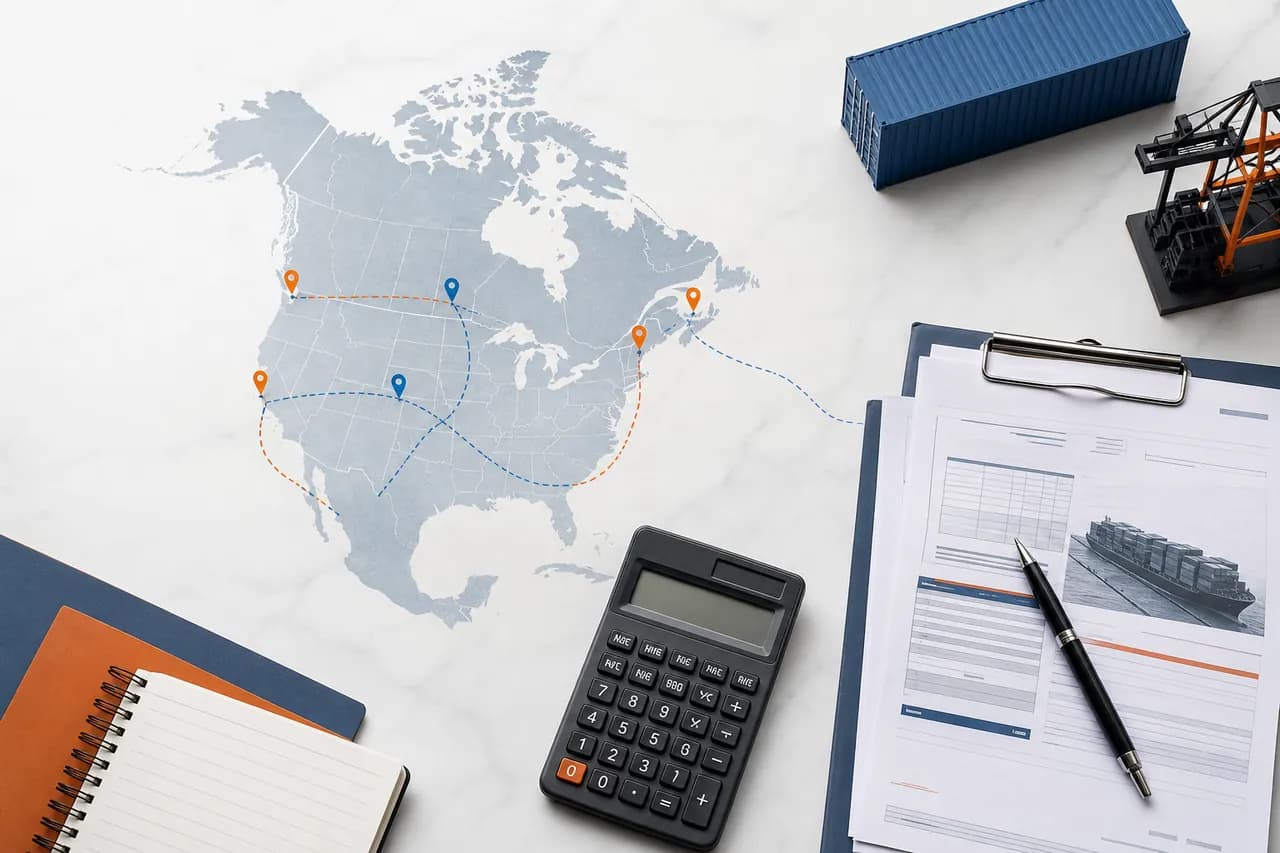
Direct answer
What should you do first?
Canada freight mode selection for China shipments should start with the required receiving date, finished package data, shipment density, handling tolerance, and the complete delivery scope. Ocean freight can suit planned replenishment with more time for consolidation and receiving coordination. Air freight can suit a smaller urgent quantity when the cargo file is complete. Express can fit compact, time-sensitive parcels when its service boundaries are clear. Compare all options against the same business outcome instead of a headline transport price.
Key planning facts
- Mode choice is a workflow decision
- Ocean, air, and express describe different transport workflows. The useful comparison includes pickup, origin handling, main movement, destination handoffs, delivery appointment, and receiving evidence.
- Finished data changes the answer
- Package count, outside dimensions, gross weight, pallet status, commodity description, ready date, and destination address should be confirmed before comparing modes.
- Ocean needs planning room
- Ocean freight can fit planned inventory when the team can work with origin cutoffs, consolidation or container steps, destination availability, and a receiving window.
- Air and express need scope control
- Air and express can support earlier movement for selected cargo, but chargeable or billable inputs, delivery boundaries, and receiving capacity must be stated clearly.
- The same endpoint makes quotes comparable
- Every option should be assessed against the same pickup point, Canadian delivery point, receiving requirement, target date, and service assumptions.
Key takeaways
- Work backward from the date usable inventory is needed at the Canadian receiving location.
- Use finished package dimensions and weight rather than early supplier estimates.
- Compare ocean, air, and express by complete handoffs instead of a port, airport, or parcel headline.
- Use a smaller urgent quantity only when the business purpose and receiving plan are explicit.
- Ask each provider to state assumptions, exclusions, validity, milestone ranges, and next confirmation dates.
- Recheck the selected mode when packaging, ready date, destination, or warehouse rules change.
Forest Leopard Operations reviews the shipment workflow against the official sources listed below. This page provides planning information, not legal, tax or product-compliance advice.
Read our editorial standardsWhat Canada Freight Mode Selection Should Decide
Canada freight mode selection is the process of choosing how a shipment should move from a finished supplier order in China to a usable receiving point in Canada. It is broader than choosing a vessel, aircraft, or parcel service. The decision should explain which mode fits the inventory deadline, the physical cargo, the number of planned handoffs, the receiving team's capacity, and the service scope included in the quotation.
This guide is for Canadian importers and purchasing teams planning repeat China shipments. It is operational: it does not publish a universal rate, promise a fixed arrival date, or replace professional advice about product-specific entry requirements. Federal Maritime Commission material helps identify who arranged an ocean option and who owns the next update.
Start by naming the outcome: a warehouse replenishment, a smaller fulfillment launch quantity, or a parcel delivery to a defined business address. Once the endpoint is clear, compare modes on the same basis rather than selecting a headline line item.
- Required receiving date and consequence of missing it.
- Finished cargo profile and handling tolerance.
- Complete movement scope from pickup through receiving evidence.
Freeze the Shipment Data Before Comparing Modes
A mode comparison is only as reliable as the shipment profile behind it. Ask for final package count, outside dimensions, gross weight, pallet status, commodity, pickup address, cargo-ready date, and Canadian delivery address. If packing is open, label the data provisional and set a confirmation date.
Dimensions matter differently across modes. Ocean planning may depend on container or consolidation use and origin or destination handling. Air and express options can depend heavily on dimensional or billable weight, package count, and maximum piece rules. A small change in carton size can change the practical ranking even when the order quantity is unchanged.
Record receiving conditions before offers: warehouse hours, appointment needs, unloading equipment, pallet rules, delivery restrictions, contacts, and proof-of-delivery requirements. The International Air Transport Association is the air-cargo reference point, while the International Chamber of Commerce explains why delivery responsibilities should sit alongside an itemized transport scope.
- Use outside measurements after final packing, palletizing, or crating.
- Separate total shipment data from the first urgent quantity, if a split is considered.
- Give every provider the same pickup, delivery, and receiving information.
Ocean, Air, and Express: How the Workflows Differ
Ocean freight can fit planned denser or larger cargo when the team can work with origin cutoffs, consolidation or container loading, vessel milestones, destination availability, inland delivery, and the warehouse window. There is no simple size rule: a small profile may need a structured plan, while a larger batch may need another service when the receiving date is fixed.
Air freight can fit a smaller urgent quantity, launch allocation, or replenishment gap when the shipment is ready and the receiving team can act on the handoff. Include pickup, origin handling, airport movement, destination delivery, package treatment, and the quote basis. An airport-to-airport number is not a complete alternative to door-to-door ocean.
Express can suit compact, time-sensitive parcels when collection, tracking, delivery area, package limits, and exceptions are clear. It is not the answer for every urgent shipment. For larger cartons, repeat inventory, or pallet handling, air or ocean may be easier to control. Ask what the express service includes and which destination events remain outside the offer.
| Mode | Often fits | Main control question | Common comparison gap |
|---|---|---|---|
| Ocean | Planned replenishment, denser cargo, more receiving lead time | What are the origin, destination, and inland milestones? | Comparing a port price with a complete delivery plan |
| Air | Smaller urgent quantity or a defined launch need | What weight basis and delivery scope are being quoted? | Ignoring finished carton dimensions or destination handoffs |
| Express | Compact parcels with clear time sensitivity | What package, address, and exception limits apply? | Assuming parcel delivery covers pallet or warehouse work |
Match the Mode to the Receiving Deadline
Work backward from the date the inventory must be usable, not merely the date a shipment is expected to leave China. Write the target receiving date, the latest acceptable date, the next confirmation date, and the action if the plan moves outside its range. This creates room for a provider to update a provisional milestone without turning an estimate into a promise.
For ocean, the plan may include supplier completion, pickup, origin receiving, consolidation or loading, departure, arrival availability, inland delivery, and appointment. For air, include cargo handoff, acceptance, flight movement, destination handling, delivery, and receiving. For express, include collection, network acceptance, tracking, delivery attempt, and exception response.
A narrow deadline does not automatically justify moving the whole order by air or express. Define the quantity that protects the business need first. The balance may follow an ocean cycle if the receiving team can manage two records and handoffs. A split helps only when both portions have clear owners, addresses, package data, and receiving instructions.
- Separate the transport milestone range from the usable-inventory date.
- Define a smaller urgent quantity only when it has a clear purpose.
- Record the next date when the provider must reconfirm the plan.
Compare Handoffs, Handling, and Exception Work
The mode with the shortest main movement is not always the easiest to receive. Count the handoffs and ask what evidence is produced at each. Consolidated ocean may include origin receiving, loading, destination handling, inland transfer, and warehouse delivery. Air has cargo acceptance and delivery stages. Express may have fewer visible steps but stricter piece, address, or delivery-attempt rules.
Handling tolerance should be part of the decision. Record stackability, pallet use, protection needs, unloading equipment, fragile packaging, irregular pieces, and any need for photo evidence before comparing quotes.
Exception ownership is equally important. Ask who contacts the supplier if cargo is not ready, approves a changed route, books a new delivery attempt, and sends the updated arrival notice. A mode is suitable only when the team can respond to its likely exceptions.
- List the handoff owner and evidence required at each movement stage.
- State packaging, pallet, unloading, and delivery-attempt constraints early.
- Name the decision owner for late cargo, changed dimensions, or failed delivery.
Build a Comparable Quote Request
Send one dated brief to every provider. Put the shipment reference, pickup and Canadian delivery addresses, finished package table, commodity, cargo-ready date, requested receiving date, and receiving requirements near the top. State whether ocean, air, express, or all three should be reviewed. The goal is comparable offers, not identical physical routes.
Ask each provider to identify scope, milestones, validity, assumptions, exclusions, appointment treatment, handling basis, and the next confirmation date. For air and express, request rating basis, package limits, and delivery-area conditions. For ocean, request origin cutoff, destination availability, inland handoff, and appointment dependencies.
Incoterms can allocate specified delivery tasks, costs, and risks between seller and buyer, but the term should not be used as shorthand for every transport service. Put the named term and place beside the operational scope. The ICC rules are a useful reference for that allocation, while the final quotation should still describe the physical movement in plain language.
- Require a complete movement description, not only a headline transport amount.
- Keep the same endpoint and receiving outcome for every option.
- Save the quote version, assumptions, validity, and decision reason together.
Decision Rules for Recurring China-to-Canada Cargo
Choose ocean when the inventory plan has working room, the cargo is ready for a structured origin and destination workflow, and the receiving team can manage the planned milestones. Choose air when a defined quantity has a meaningful earlier-use purpose and the finished shipment file supports a clear acceptance and delivery plan. Choose express when the parcels, address, delivery scope, and exception rules fit the provider's network.
When two modes remain plausible, use a simple scorecard. Rate each option against receiving date, package fit, handoff count, handling risk, receiving capacity, update quality, and scope completeness. Use the same scale and write a reason for each score. This keeps familiarity from deciding the result.
Review the selection when the supplier changes the outer carton, the order becomes a pallet, the ready date moves, the Canadian address changes, or the warehouse narrows its appointment window. A mode decision is a current plan based on current facts. It should be updated when those facts change.
- Ocean: planned stock, structured handoffs, and enough receiving lead time.
- Air: selected urgent quantity, complete data, and an actionable receiving plan.
- Express: compact parcels, defined network scope, and clear exception handling.
Conclusion: Make the Choice Traceable
A sound Canada freight mode selection connects the inventory deadline with the finished cargo profile and the complete receiving workflow. Ocean can suit planned volume and a wider planning window. Air can suit a defined urgent quantity. Express can suit compact parcels when its limits and delivery scope are clear. None of those statements replaces a shipment-specific comparison.
Keep one decision file with package data, destination requirements, quote versions, milestone ranges, assumptions, exclusions, owners, and the next confirmation date. If the route or packing changes, update the file before release. That record explains why the selected mode fits and what would cause a different choice next time.
Punctual Logistics can review the same finished shipment profile across ocean, air, and express options from China to Canada. Send the pickup city, package-level dimensions, gross weight, cargo-ready date, Canadian delivery point, receiving rules, and required date so the comparison can focus on executable scope rather than an isolated rate.
- Tie the selected mode to a dated receiving need and a finished shipment profile.
- Compare complete scope, handoffs, assumptions, and receiving work.
- Reconfirm the plan after material changes to cargo or destination conditions.
Frequently asked questions
Which freight mode may fit China-to-Canada cargo?+
There is no universal answer. Ocean may fit planned cargo with more receiving lead time, air may fit a defined urgent quantity, and express may fit compact parcels. Compare the same pickup, delivery point, finished package data, deadline, and service scope before choosing.
When should a Canadian importer choose air instead of ocean?+
Consider air when an earlier quantity has a clear business purpose, the cargo is ready, the package data is complete, and the Canadian receiving location can act on the expected handoff. Compare the complete air movement with the complete ocean plan rather than comparing flight time with port-to-port transit.
Is express suitable for repeat inventory shipments?+
Express can suit compact repeat parcels when the provider's collection, package, delivery-area, and exception rules fit the shipment. For palletized or larger recurring inventory, compare air and ocean workflows as well, because parcel handling may not match the receiving site's equipment or appointment process.
What information is needed for a mode comparison?+
Provide finished package count, outside dimensions, gross weight, pallet status, commodity description, pickup address, Canadian delivery address, cargo-ready date, required receiving date, warehouse rules, and preferred scope. Use the same data for each option so the differences reflect the mode and service plan.
Can one China shipment be split between ocean and air?+
Yes, a split can work when the urgent quantity has a clear purpose and both portions have separate package data, owners, tracking records, delivery addresses, and receiving instructions. Count the extra coordination and receiving work before treating a split as an improvement.
Official sources
Sources were last checked on 2026-09-26. Requirements and carrier practices can change; verify the current official page before booking.
Change log
- Initial operational comparison created after direct checks of FMC, IATA, and ICC source references.