
Direct answer
What should you do first?
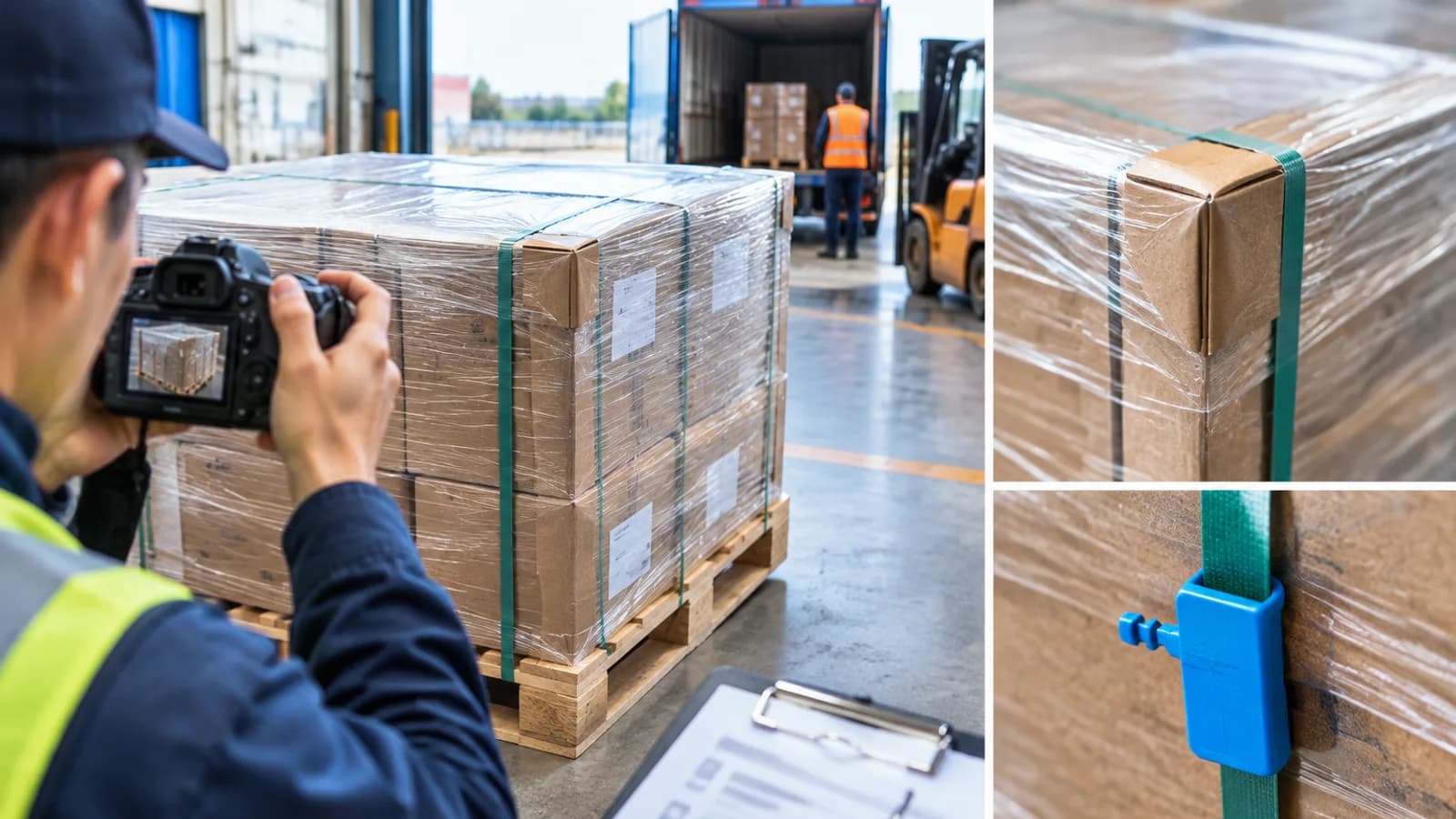
A cargo photo evidence checklist for freight should connect each image to a shipment reference, package or pallet identity, visible condition, handoff stage, date, and responsible location. Photograph the outside condition before movement, identifying marks without exposing private data, seal or pallet details when relevant, the loading or receiving context, and any exception from more than one useful angle. Store the images with a short written note so the record explains what was visible, when it was captured, and what action followed.
Key planning facts
- A photo needs a business purpose
- The useful question is not how many images were taken, but whether the record shows a defined package, pallet, seal, handoff, condition, or exception that another person can understand later.
- Stage and identity belong together
- Every image set should be tied to a shipment reference, supplier or receiving location, package group, capture stage, date, and person or team responsible for the handoff.
- Context prevents misleading close-ups
- A close photo can show a crushed corner, but a wider view helps identify the pallet position, surrounding cartons, loading area, or delivery context that makes the observation useful.
- Neutral records protect privacy
- Crop or avoid faces, private addresses, phone numbers, customer names, screens, and unrelated paperwork when they are not needed to document the freight event.
- Written notes complete the image
- A short note should explain what is visible, what was checked, whether the condition is accepted or open, who owns the next action, and where the complete record is stored.
Key takeaways
- Set the evidence purpose and naming convention before cargo reaches the first handoff.
- Capture a wide context view, an identity view, and a condition detail when each is needed.
- Use the same shipment reference and package group across images, notes, and delivery records.
- Photograph seals, pallet corners, labels, visible damage, and loading or receiving context without exposing unrelated private data.
- Record exceptions immediately with an owner, next action, and update deadline.
- Store the original files and a short index so the record can be found without searching through a camera roll.
- Reconcile the photo record with the package count and written handoff before closing the shipment stage.
Forest Leopard Operations reviews the shipment workflow against the official sources listed below. This page provides planning information, not legal, tax or product-compliance advice.
Read our editorial standardsWhat A Cargo Photo Evidence Checklist Should Prove
A cargo photo evidence checklist is a practical system for visual records taken during pickup, inspection, loading, transfer, delivery, and receiving. It should help a second person answer five questions: what shipment is shown, which package or pallet is involved, when and where the image was captured, what condition is visible, and what action followed.
This guide is for importers, suppliers, warehouse teams, and freight coordinators who need practical evidence around ordinary cargo movements. It focuses on package identity, visible condition, loading context, and delivery reconciliation. The Federal Maritime Commission describes ocean transportation intermediaries as parties that arrange or coordinate ocean transportation services; that handoff mindset helps decide which visual record belongs with each update.
Before the first image is taken, define the shipment reference, package group, stage, storage location, and responsible person. A clear purpose keeps the photographer focused and the evidence easy to review.
- Shipment identity and package or pallet group.
- Capture stage, location, date, and responsible team.
- Visible condition, exception status, and next action.
Create A Simple Naming And Indexing System
A consistent file name is more useful than a sophisticated camera application. Use a short pattern such as shipment reference, stage, package group, sequence, and date. Keep the readable description in a separate index when the operational team needs more detail.
The index should contain the image file name, shipment reference, stage, location, package or pallet identity, capture time, photographer or team, short observation, and status. Use one row per image set when several views document the same event. If a photo is replaced because it is blurred or incomplete, preserve the replacement reason rather than silently deleting the trail.
The International Chamber of Commerce explains that Incoterms rules allocate specified commercial tasks, costs, and risks between buyer and seller. That allocation does not define an image naming system, so the operational record should stand on its own. The index should make clear which team captured the evidence and who can answer a follow-up question.
- Use a stable shipment reference instead of personal names in file names.
- Keep one index with stage, package group, observation, and owner.
- Record replacements, missing views, and corrections instead of hiding them.
Pickup And Pre-Movement Photo Sequence
At pickup, start with a wide view that shows the cargo in its surroundings. Follow with an identity view of the carton group, pallet, or crate and then condition details for corners, wrapping, closures, or visible marks that matter to the handoff. The sequence should show the cargo before it changes position.
Photograph only the marks needed to connect the cargo to the shipment record. Avoid capturing supplier screens, unrelated invoices, private addresses, faces, or other data that does not help identify the freight. If the package mark is necessary but contains information that should not circulate widely, store the full-resolution original in the approved location and use a controlled copy for broader review.
Use a written note to state whether the package count, visible condition, and pickup instruction were checked. If the cargo is not ready, the note should say what was missing and who owns the next confirmation. A photo of an empty pickup area is not enough by itself; it needs a clear operational explanation.
| View | What it should show | Review question | Record beside it |
|---|---|---|---|
| Context | Cargo in the pickup or staging area | Is this the right handoff location? | Stage, location, and time |
| Identity | Package, pallet, or group mark | Which shipment group is shown? | Shipment reference and package group |
| Condition | Corners, wrapping, closure, or visible mark | What was visible before movement? | Observation and accepted/open status |
| Exception | Missing, changed, or damaged item | What needs a decision? | Owner, action, and deadline |
Inspection And Packing Evidence
Inspection photographs should answer a narrower question than general pickup images. Show the product or package group in the inspection setting, then capture the specific visible feature that was checked. Useful examples include outer packaging condition, carton count, pallet stability, closure position, protective material, or a measurement setup.
Use a consistent order: context, identity, detail, and result. If the inspection finds an open issue, capture the affected area from a useful distance and close enough to show the detail, then note the observed condition without guessing its cause. State what is visible, what remains unknown, and who acts next.
The International Maritime Organization publishes the International Maritime Dangerous Goods Code as a maritime reference. This checklist does not provide product-handling instructions for restricted cargo; it simply recommends that ordinary visual records be tied to the correct operational stage and escalated through the responsible process when a special handling question appears.
- Pair every close detail with enough context to identify the cargo.
- Describe visible facts separately from suspected cause or responsibility.
- Escalate special handling questions to the responsible specialist process.
Loading, Seal, And Handoff Views
Loading evidence should show the relationship between the cargo and the movement stage. Depending on the shipment, that may include pallet position, carton count, protective blocking, wrapping, loading progress, closure, or a seal after the load is complete. Capture the identifying detail only when it is required for the shipment record, and keep the image paired with a written note that states who completed the handoff and what was checked.
A useful loading set normally includes one context view, one cargo arrangement view, and one closure or handoff view. Do not assume that a single image of a closed vehicle proves what was loaded inside. Reconcile the package or pallet count before closure and identify any item held back, added, or substituted.
When a seal or closure is part of the record, photograph it clearly and note the associated shipment reference, but avoid publishing the image outside the teams that need it. Store access and retention rules with the index so later reviewers know which copy is authoritative.
- Show cargo arrangement before closure when loading control matters.
- Reconcile package or pallet count before the final closure view.
- Treat seal and closure images as controlled operational records.
Delivery And Warehouse Receiving Photos
At delivery, the evidence should help reconcile what arrived with what left the previous stage. Start with the receiving context, then show the delivered package or pallet group, visible condition, and any discrepancy. Record an appointment or delivery reference in the index without photographing unrelated personal information.
Receiving photos are most useful when they are taken before cartons are dispersed into storage. Capture damage, wetness, broken wrapping, missing pieces, or visible count differences while the handoff is still understandable. If the condition is normal, a short accepted note and a context image can be enough.
Close the stage with a written reconciliation: expected count, observed count, visible condition, open exception, owner, and next update. The record can then support the next warehouse or transport step without asking someone to infer the outcome from images alone.
- Photograph the delivered group before it is separated or restacked.
- Pair visible exceptions with count, location, owner, and next action.
- Close the stage with a receiving note, not images alone.
Privacy, Quality, And Retention Controls
A cargo photo record should reveal only what the operational decision requires. Avoid faces, private addresses, phone numbers, customer names, computer screens, unrelated paperwork, and visible credentials whenever they do not support the shipment record. If a person must appear to explain scale or handling, use an approved operational image and do not make the individual the subject of the record.
Quality control can stay simple. Check that the image is in focus, the relevant area is visible, the file opens, the time and stage are recorded, and the image is attached to the correct shipment reference. If lighting, angle, or obstruction makes the evidence ambiguous, retake it while the cargo is still available.
Set a retention period and access list that match the company's operating needs. Keep originals where they can be retrieved, create controlled copies for wider review, and mark any edited or cropped version as a derivative.
- Remove unrelated private information from the frame whenever possible.
- Check focus, context, identity, file access, and correct shipment association.
- Keep originals and label controlled copies or crops as derivatives.
Conclusion: Make The Visual Record Actionable
A cargo photo evidence checklist works when each image answers an operational question and sits beside a written record. Start with a stable shipment reference, capture context and identity before close details, document loading or receiving changes while the cargo is visible, protect unrelated private information, and record the owner and next action for every open issue.
The strongest record is not the largest one. It is the set that lets a supplier, forwarder, warehouse, or importer understand what was visible at each handoff without guessing. Keep the image index with the shipment file, reconcile package counts at the stage boundary, and replace unclear images before the cargo moves out of view.
Request a quote with the packing record, pickup location, cargo profile, handoff stages, and receiving requirements. Include the shipment reference and evidence points so the photo workflow supports the freight plan.
- Tie every image set to a shipment, stage, package group, and written observation.
- Capture enough context to make close condition details understandable.
- Use the quote request to define the handoffs and evidence the shipment requires.
Frequently asked questions
What should a cargo photo evidence checklist include?+
Include the shipment reference, stage, location, package or pallet group, capture date, context view, identity view, condition detail, written observation, owner, and next action. Add seal, loading, delivery, or receiving views when those events matter to the handoff.
How many photos should be taken for each freight handoff?+
Use as many views as needed to show context, identity, condition, and any exception, but do not chase a fixed count. A small, focused set with a clear index is more useful than a large camera roll with no stage or package reference.
Should cargo photos show labels and shipment references?+
Show only the identifying detail needed to connect the image to the shipment record. Avoid unrelated private information, customer data, faces, and full documents. Store a controlled original when the complete mark is operationally necessary and limit broader copies.
How should visible freight damage be photographed?+
Take one wider view that identifies the package or pallet and one closer view that shows the visible condition. Add the stage, time, location, package reference, observed facts, owner, and next action. Do not infer the cause from the image unless it has been separately confirmed.
Can Punctual Logistics help define a cargo photo workflow?+
Yes. Share the shipment reference, cargo profile, pickup and receiving points, planned handoffs, packaging or pallet details, and the evidence your team needs. Punctual Logistics can help align inspection, consolidation, warehousing, delivery, and quote scope around one practical record.
Official sources
Sources were last checked on 2026-09-26. Requirements and carrier practices can change; verify the current official page before booking.
Change log
- Initial source-checked checklist created for cargo photos, handoff context, visible condition, privacy, and receiving reconciliation.
- Added an explicit request-a-quote call to action after live verification found the CTA wording was too indirect.